Color Analysis: Beauty & Style
- 5.0
- Rating
- 10.00K
- Installs
- Free
- Price

 Analysis by App-foxy
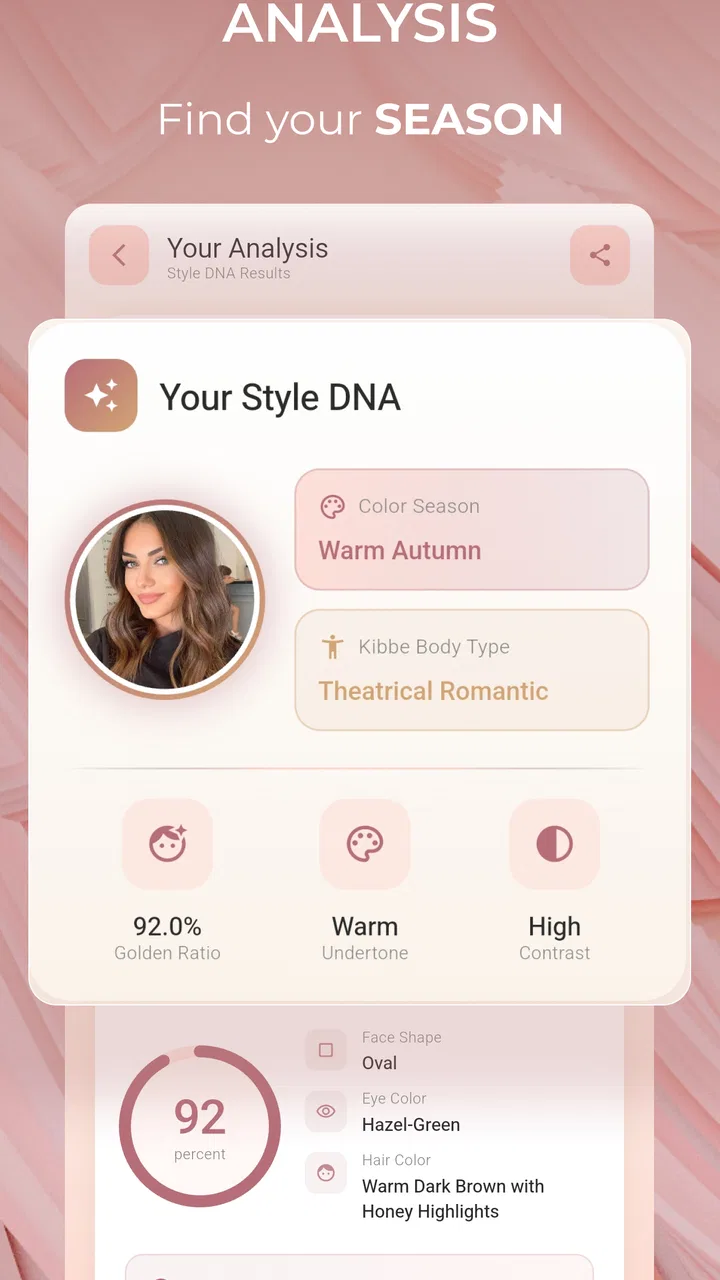
I tried Color Analysis: Beauty & Style as the sort of app you might open before changing your hair color, refreshing your makeup bag, or choosing clothes for an event. Its focus is personal style: it uses AI to help identify a color type and connect that result with haircut, makeup, beauty, and fashion ideas. That makes it more useful than a simple “which colors suit me?” quiz, because the result is meant to influence several parts of a look rather than one outfit.
My first impression was that it works best as a conversation starter with yourself. It does not replace a stylist, makeup artist, or thoughtful shopping decision, but it can give you a clearer direction when your wardrobe feels disconnected or when you keep buying shades that look good in the store and disappointing at home. I also found it interesting for household use: two people can discuss style choices together, while still treating each person’s analysis as personal rather than as a shared rulebook.
How the app fits into a shared household routine
A realistic use case is a weekend preparation session. One person may be getting ready for a wedding, another may be considering a haircut, and a teenager may simply be curious about why certain colors feel better than others. Instead of passing around a paper color chart, each person can approach the app with a separate question and compare the conversation afterward. The useful part is not turning the household into a panel of judges; it is having a common vocabulary for talking about warm, cool, flattering, or difficult shades.
You May Also Like

 Pandora - Music & Podcasts
Pandora’s Music Is Easy to Start, but Harder to Recover
Pandora’s strength is its low-effort path from a seed to a station. Its weak spot is how much confidence it asks you to place in connection, setup, and quiet recovery.

 8 Ball Pool
 Is Built on Rivalries, Rematches, and Routine
A close look at the rivalries, rematches, shared routines, and unanswered safety questions that turn a quick pool match into a persistent mobile community.

 Samsung Music
’s Quiet Strength Is Playing What You Already Own
Its reach comes less from spectacle than from dependable access to a personal library. That simplicity is both the app’s strongest retention engine and its ceiling.

 AccuWeather: Weather Radar
AccuWeather Review: A Quick, Clear Forecast for Everyday Decisions
For everyday plans, the best forecast is the one you can understand quickly. AccuWeather makes rain timing, radar, and local conditions easy to act on, with a few trade-offs.

 Hill Climb Racing
Why Hill Climb Racing Still Turns Crashes Into One More Run
A tiny car, a bumpy hill and one more upgrade: Hill Climb Racing keeps resurfacing because its simple chaos makes every near-miss feel personal.

 AliExpress - Shopping App
AliExpress Makes Global Shopping Feel Personal, but Shoppers Bear the Risk
AliExpress turns a global marketplace into a pocket-sized discovery engine. Its reach is useful, its shopping loop compelling, and its trade-offs easy to miss.
More From Our News Desk
View All News


I would keep the actual analysis personal. If several people use the same phone or tablet, I would not assume that the app automatically separates profiles, remembers who is who, or keeps one person’s results away from another. I would complete one person’s session, note the useful conclusions, and then clear the way before the next person starts. That small bit of discipline matters because a color reading based on the wrong face or the wrong photo can lead to very different style suggestions.
This is also a good reason not to treat the result as a family consensus. A color that looks attractive on one person may make another person feel washed out, overly bright, or simply unlike themselves. I liked the idea of using the app to coordinate a group occasion without forcing everyone into matching colors. For example, one person might choose a softer version of a suggested shade, while another uses the same color family in accessories. That creates visual harmony without pretending that the same palette works equally well for everyone.
Start with a clean, individual setup
The quality of an AI style recommendation depends heavily on the material you give it. I would use a recent, clear photo with the face visible and avoid making the first test while wearing dramatic makeup, strong colored lighting, or a hat that changes the visible balance. This is not a special trick for this category; it is simply the most sensible way to prevent the app from analyzing the room, the camera processing, or a temporary makeup look instead of your natural coloring.
For a shared device, I would also avoid rushing from one person to the next. Finish the first person’s exploration, write down the palette or style ideas worth keeping, and only then begin another session. If the app presents any personal result on screen, take a moment to check whose result you are viewing before discussing it. A household does not need complicated rules here, just a clear boundary between one person’s appearance information and another person’s.
That boundary is especially important when a parent and child use the same device. A young user may see the app as a playful beauty tool, while an adult may use it for a serious wardrobe decision. Those are different contexts, even though they happen inside the same application. I would supervise the first use with a child or younger teenager, not because the app is presented as unsuitable for them, but because beauty advice can quickly become personal and emotional.
The application is listed for Everyone, which makes it approachable for a broad household audience. Still, an age label does not tell a child how much importance to give an AI suggestion. I would frame the result as an experiment: useful for trying combinations, never a judgment about attractiveness. That distinction is more valuable than any color chart, particularly for users who are still developing confidence in their appearance.
Turning a color result into practical decisions
The strongest workflow is to move from analysis to a small real-world test rather than buying a new wardrobe immediately. I would choose one suggested color and compare it with clothes already owned. Try the garment near the face in daylight, then check whether the color still feels right across different settings. If it works, repeat the idea with a scarf, lipstick, nail color, or accessory before spending more money.
This approach exposes one of the app’s important trade-offs. AI can organize possibilities quickly, but it cannot fully understand your lifestyle, workplace, comfort level, cultural preferences, or the colors you already love. A palette may be technically flattering and still be impractical if your closet is mostly neutral, your job requires conservative clothing, or you dislike high-maintenance hair color. I found the app more helpful when I used it to narrow choices, not when I expected it to make every decision for me.
The haircut and makeup angle adds useful breadth. Someone who opens the app only for color analysis may discover that the more valuable outcome is a complete styling direction: a different haircut shape, a softer makeup approach, or a better relationship between hair and clothing. I would still treat these suggestions as ideas to discuss with a professional. A hairstyle that looks appealing in a general recommendation may not suit hair texture, maintenance time, face shape, or the realities of daily life.
One practical tip is to separate “looks good on me” from “I will actually wear it.” Those are not the same question. After using the app, I would make two short lists: shades that improve the face, and shades that fit the person’s existing routine. The overlap is where the best purchases usually are. This prevents an attractive analysis from turning into a costly collection of clothes that remain untouched in the closet.
What coordination looks like without losing personal choice
For couples, siblings, or friends sharing style planning, the app can support coordination without requiring identical results. One person may use the color guidance to choose a jacket, while another uses it to select earrings or a shirt. The common theme can be subtle: related tones, similar contrast, or complementary accessories. I prefer this to asking everyone to wear the exact same shade, because personal color analysis is most useful when it respects differences.
It can also help before a group photo or celebration. Each person can test their own options and then compare the overall effect in ordinary clothing. The goal is not to make the app decide what the group must wear. Instead, it can reveal when several people have chosen competing bright colors or when one outfit may disappear against the background. This is a small but concrete use that goes beyond browsing beauty inspiration.
There is a limit, though: I would not interpret one person’s result as advice for another person. If a family member receives a palette that seems convincing, it may be tempting to copy it. That shortcut defeats the point of individual analysis. Lighting, hair color, skin tone, and personal contrast all affect how a shade behaves, and AI recommendations should be treated as personal prompts rather than household standards.
Privacy, trust, and the right level of supervision
Because this is a beauty app built around personal appearance, I would use it with the same care I use for any tool involving photos. On a shared device, I would avoid leaving a personal image or result open where another person can casually browse it. I would also explain to younger users that they should ask before uploading someone else’s photograph. The app’s Everyone rating makes it suitable for broad access, but respectful photo habits still matter.
I would be especially careful with children who are sensitive about appearance. The best conversation is not “the app says this is your color type,” but “this is one suggestion you can test.” If a child dislikes the result, there is no reason to insist that the AI is correct. Style should remain flexible, and confidence should not depend on receiving a particular classification. In my view, this is where adult guidance adds more value than another round of analysis.
For adults, trust means keeping expectations realistic. A perfect rating from other users can make an app look reassuring, and this one has a five-point average from around three hundred ratings, with more than ten thousand installs. Those figures suggest that people who have tried it respond positively, but they do not guarantee that every photo, face, or style preference will produce a satisfying result. I would still judge the recommendations against real clothing and personal taste.
The developer is SL-Solutions, and the current version is 2.1.6. It runs on Android 7.0 or later, so many older compatible devices can access it. That is convenient for a household that shares an older phone, although the experience will naturally depend on the camera and screen quality of that device. A poor front camera or dim display can make color decisions less reliable, so I would do the final clothing check away from the screen.
Cost, access, and when another option is better
The app is free to install, which makes it easy to try before deciding whether it belongs in your regular beauty routine. There are in-app purchases ranging from $8.99 to $59.99 per item, so I would look carefully at what is included before paying. The free starting point is valuable for a quick experiment, but anyone considering a purchase should ask whether the additional guidance will change a real decision or simply provide more content to browse.
This pricing structure also changes how I would use it in a shared household. I would not buy an item simply because several family members are curious. First, let each person test the free experience and identify a specific need: an upcoming event, a haircut decision, or a difficult wardrobe refresh. If the app helps with that concrete problem, the cost may feel more reasonable. If the household only wants entertainment, free online color quizzes or a conversation with a stylist may be enough.
Compared with a traditional in-person color consultation, the app is faster, more private, and easier to repeat. It is also less personal. A professional can examine you in changing light, ask about your habits, and explain why a recommendation works. Compared with generic social media inspiration, the app is more focused on the individual, but it may offer less context about fabric, product quality, maintenance, and real-life wear. I would use it as a first filter, then rely on a mirror, daylight, and experienced advice for expensive changes.
It is not the right choice for someone who wants a precise professional diagnosis, a detailed shopping service, or a full makeover plan tailored to hair texture and lifestyle. It may also frustrate users who already know their palette and only want product links or brand-specific recommendations. On the other hand, it suits people who feel overwhelmed by conflicting beauty advice and want a starting point that connects color with haircut, makeup, and fashion.
Small habits that make the recommendations more useful
I would run the analysis when the face is presented naturally, then repeat the practical check in daylight rather than repeatedly chasing a different result through edited photos. If the recommendation changes between images, that is a reason to slow down and compare the conditions, not proof that one result is permanently correct. Consistency in the input is one of the simplest ways to make an AI style tool more useful.
I would also keep a short note beside the closet. Write down the shades that worked, the ones that felt too harsh, and the combinations that were easy to wear. This turns a one-time app session into a personal reference. After a few weeks, the note becomes more valuable than a single label because it reflects actual experience with clothing, makeup, and lighting.
Another useful trade-off is to test existing items before changing hair. Hair color is a larger commitment than a shirt or lipstick, and an AI suggestion should not be the only reason to make a chemical or high-maintenance change. Start with temporary or reversible choices. If the color family continues to look good in real life, take the idea to a qualified stylist who can account for hair condition and upkeep.
For shared use, I would let each person choose their own “experiment.” One person might test a new clothing shade, another might compare makeup tones, and another might simply explore haircut ideas. This keeps the session cooperative without making anyone feel evaluated. It also makes the app more useful for mixed ages, because a child can treat it as creative play while an adult applies the same tool to a practical purchase.
My household verdict
I see Color Analysis: Beauty & Style as a friendly starting point for people who want more direction than a random beauty feed provides. Its appeal comes from connecting color analysis with haircuts, makeup, beauty, and fashion, rather than leaving the user with an isolated palette and no next step. I enjoyed it most when I used the suggestions to test clothes I already owned and discuss realistic changes with another person.
The best way to use it is as a style compass, not an authority. Keep each person’s session separate on a shared device, supervise younger users with a calm explanation of what AI can and cannot decide, and check every important recommendation in natural light. Those habits address the main practical weaknesses without taking away the app’s convenience.
For a free beauty app with broad age access, it offers a low-risk way to explore personal style, while the optional purchases mean you should decide based on a specific need rather than curiosity alone. I would recommend it to anyone preparing for a wardrobe refresh, a special occasion, or a new beauty direction. I would skip it if I wanted a human consultation or highly technical product advice. Used thoughtfully, though, it can turn vague style uncertainty into a few manageable experiments that you and your household can coordinate without giving up individual choice.
FAQs for Color Analysis: Beauty & Style
01What is Color Analysis: Beauty & Style, and how does it work?
Color Analysis: Beauty & Style is designed to help you discover which colors may complement your natural appearance. After providing a photo or answering style-related questions, the app analyzes visible characteristics such as skin tone, hair color, and eye color. It then suggests suitable color palettes, clothing shades, makeup ideas, and styling recommendations. Results should be treated as helpful guidance rather than a professional consultation.
02Is Color Analysis: Beauty & Style suitable for all skin tones and appearances?
The app can be useful for people with a wide range of skin tones, hair colors, and eye colors, but the quality of its recommendations depends heavily on the information and images provided. Lighting, camera filters, makeup, and inaccurate answers may affect the analysis. Users with less commonly represented features may find some suggestions less precise, so it is best to compare the results with your own preferences and real-world experience.
03Does the app require a photo, and is my personal information safe?
Depending on the feature you use, Color Analysis: Beauty & Style may request access to a photo or camera so it can evaluate your appearance. Before uploading an image, review the app’s privacy policy and permission requests carefully. Check whether photos are processed on the device or sent to external servers, how long data is retained, and whether information may be shared with service providers or used for improvement.
04Is Color Analysis: Beauty & Style free to download and use?
The application may be available as a free download, but some features can be restricted behind in-app purchases or a subscription. Premium access may include more detailed color reports, expanded style recommendations, additional analyses, or an ad-free experience. Before starting a trial, read the billing terms carefully, including the renewal price, trial duration, and cancellation procedure through Google Play or the App Store.
05Can the app replace a professional stylist or color consultant?
Color Analysis: Beauty & Style is best used as an accessible starting point for exploring personal style, not as a replacement for an experienced stylist, makeup artist, or color consultant. Automated analysis can be influenced by lighting, image quality, screen settings, and subjective beauty standards. Use its recommendations as inspiration, test colors in natural light, and choose shades that make you feel comfortable and confident.
Pros
- Personalized color suggestions make shopping for clothes and makeup easier.
- Useful for exploring seasonal palettes and coordinating everyday outfits.
- Simple interface makes the analysis approachable for beginners.
- Can inspire new combinations without needing professional styling advice.
- Helpful reference when comparing shades under different lighting conditions.
Cons
- Results may vary depending on camera quality
- lighting
- and skin preparation.
- Some recommendations can feel too general for complex undertones.
- Advanced styling guidance may require paid features or additional purchases.
- Color analysis is subjective and should not replace professional consultation.
- Frequent camera access may raise privacy concerns for some users.

Color Analysis: Beauty & Style
Gallery